


A thumb-sucking habit, a persistent open-mouth posture or teeth that do not seem to meet can leave parents wondering whether they should act now or wait. The first step is observation and a professional assessment. A habit does not automatically mean that a child needs braces, and blame rarely helps a child change it.
For families looking for help with childhood bite problems in Bloomington, an orthodontic visit can clarify what is developing normally, what should be monitored and what may benefit from treatment. The American Association of Orthodontists recommends an orthodontic check by age seven, or earlier if a dentist identifies a concern.
How habits and bite development can interact
A developing bite reflects several influences, including growth, the way teeth erupt and pressures on the teeth. Some oral habits can matter depending on how often they occur, how strongly they act and how long they continue. Those details are more useful to the clinician than a simple yes-or-no answer about a habit.
For example, occasional thumb-sucking and a frequent, sustained habit are different histories. Likewise, an open-mouth posture may be something to discuss with the dental team or a medical clinician; it does not, by itself, diagnose a jaw problem, nasal obstruction or sleep disorder.
The American Academy of Pediatric Dentistry’s parent information provides background on oral habits. Your child’s dentist and orthodontist can help interpret the observations in the context of their teeth and development.
What to notice—and what to do next
| Observation | Useful details to record | Reason to discuss it |
|---|---|---|
| Thumb or finger sucking | When it happens, how often, and whether your child wants help stopping | The duration and pattern may influence the advice |
| Continued pacifier use | Daytime or sleep use, and what comfort it provides | The team can suggest an age-appropriate transition plan |
| Front teeth that do not meet | Whether the gap is changing and which teeth have erupted | An examination can distinguish development from a bite concern |
| A jaw that shifts when closing | What you notice during normal eating or closing | The clinician can check how the teeth contact |
| Mouth breathing or snoring | When it occurs and any sleep concerns | Medical assessment may be appropriate alongside dental review |
| Early loss of a baby tooth | Which tooth, when it was lost, and why | Space and eruption may need monitoring |
A brief note or a photograph of an everyday observation can help you explain a concern. Do not repeatedly make a child demonstrate a movement or attempt to diagnose the bite from a photo.
Support habit change without creating a battle
Start with the reason the habit happens. Some children use sucking for comfort when tired, anxious or settling to sleep. Removing that comfort without another coping strategy can make the situation harder for the family.
Discuss a supportive plan with the dental team. Useful approaches may include noticing triggers, choosing an alternative bedtime comfort and praising the child’s effort. The right approach depends on age, readiness and the reason for the habit. Avoid punishment, teasing and frightening claims about how the child’s face will look.
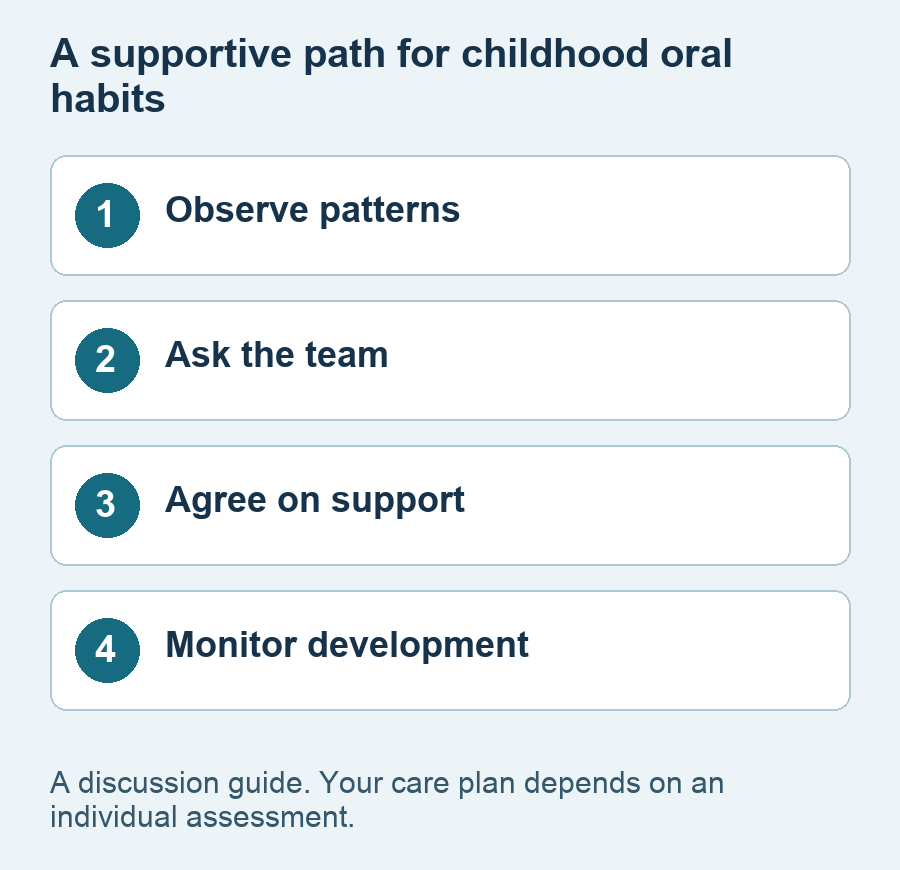
Try a practical sequence:
- Observe quietly. Notice the usual setting without correcting every occurrence.
- Ask for professional guidance. Describe frequency, duration and any bite changes.
- Include your child. Use simple, neutral language and agree on a manageable goal.
- Choose a replacement routine. A comfort object, story or calming activity may support the transition.
- Review progress. Adjust the plan with the clinician if the habit persists or the child becomes distressed.
Do not introduce a habit appliance or home remedy on your own. An appliance, when indicated, requires a clear purpose, an explanation and ongoing professional review.
Does an early visit mean early braces?
No. An early assessment may lead to observation while more teeth erupt. If treatment is recommended, the orthodontist should explain the specific problem, the benefit of acting at that stage and the consequences of waiting.
Ask whether the proposed treatment addresses a present problem or a future risk. Ask what success would look like and whether a later phase of treatment may still be needed. “Phase 1” is a description of timing, not a promise that all later orthodontics will be avoided.
Read Bowers Orthodontics’ early-treatment information for the practice’s overview. For broader background, the AAO explains the possible benefits of early treatment.
Mouth breathing and sleep concerns need the right assessment
Tell the clinician if your child regularly snores, has difficulty breathing through the nose or seems to have disrupted sleep. Dental observations can support a referral, but an orthodontic examination alone does not establish every cause of a breathing concern.
Orthodontic treatment should not be presented as a guaranteed cure for nasal obstruction or sleep apnea. Ask which clinician will assess the medical concern and what any proposed dental treatment is intended to accomplish. Seek prompt medical help for breathing difficulty.
Bring a short history to the consultation
Your child does not need a perfect explanation. Bring the approximate age the habit began, when it usually occurs, any previous attempts to change it, dental history and concerns raised by the family dentist. Mention tooth injuries, early tooth loss and relevant medical or sleep concerns.
Use Bowers Orthodontics’ first-visit guide to prepare. The goal is a clear next step: reassurance, monitoring, support for habit change, further assessment or a treatment discussion.
Frequently asked questions
Is thumb-sucking always harmful to a child’s bite?
No. The pattern, frequency, intensity and duration matter, along with the child’s development. A clinician can assess whether it is affecting the bite.
Should I wait until all the adult teeth arrive?
An orthodontic check is recommended by age seven. Earlier assessment may be appropriate if your dentist identifies a concern; treatment is not automatic.
Is a pediatric orthodontist the same as a pediatric dentist?
No. A pediatric dentist specializes in children’s dental care. An orthodontist specializes in tooth and jaw alignment and may treat children as well as adults.
Can an appliance stop mouth breathing?
That depends on the cause. Breathing concerns may need medical assessment; an appliance should not be assumed to resolve them.
What if my child is not ready to stop the habit?
Tell the dental team. They can help choose an age-appropriate approach that considers comfort, readiness and the actual clinical findings.