
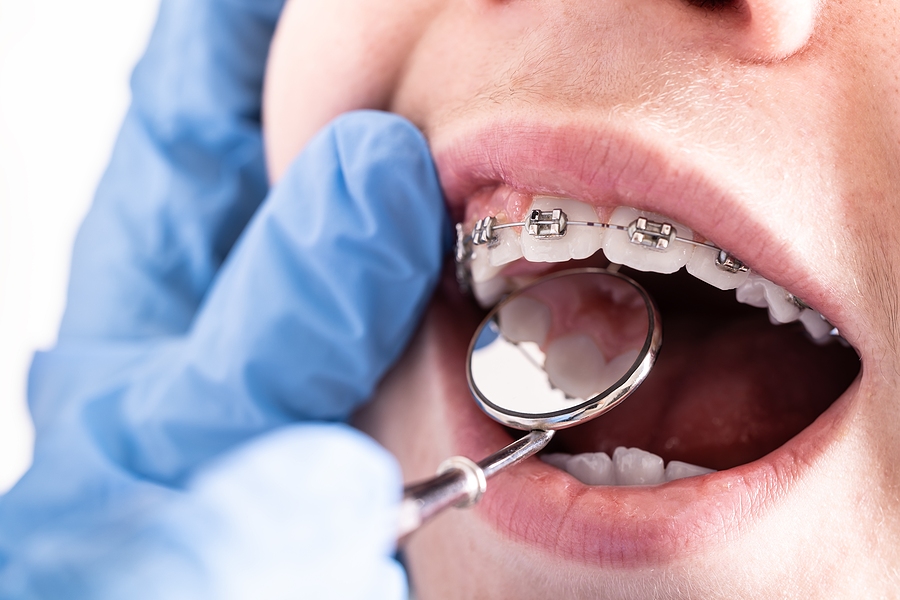

Braces soreness peaks in the first two to three days after your appliances go on, and again for about a day after each adjustment. It is pressure and tenderness rather than sharp pain, and almost all of it responds to a handful of simple measures. If you have just started with braces in Bloomington, IL, this is what actually helps, and what to stop doing because it makes things worse.
Key Takeaways
- Mild soreness is common as braces apply controlled forces to move the teeth, but discomfort varies from person to person. Soreness comes from the ligament around each tooth being compressed, not from the brackets themselves. It is a sign treatment is working.
- Cold, soft food and orthodontic wax cover most of it. Wax addresses a different problem than painkillers do.
- Ask your orthodontist which pain reliever they prefer before reaching for one.
- Pain that is sharp, one-sided, or increasing after day three is not normal soreness and should be checked.
- The cheeks and lips toughen within about two weeks, after which most patients stop noticing the appliance.
Why braces hurt in the first place
Nothing is being tightened against the tooth in the way the word “tightening” suggests. Each tooth sits in its socket suspended by the periodontal ligament, a thin layer of fibres between the root and the bone. When an archwire applies force, that ligament compresses on one side and stretches on the other, which triggers the inflammation that lets bone dissolve ahead of the tooth and rebuild behind it.
That inflammatory response is the soreness. It is also exactly what allows teeth to move, which is why some discomfort is expected rather than a sign that something has gone wrong. The American Dental Association describes this as a normal part of orthodontic treatment.
There is a second, separate source of discomfort in the first week: the brackets physically rubbing the inside of the cheeks and lips before that tissue has toughened. That one is mechanical rather than inflammatory, and it needs a different solution.
Ten ways to relieve the discomfort
1. Cold water and cold food. The simplest and one of the most effective. Cold reduces inflammation and numbs the area. Cold water held in the mouth, ice cream, yoghurt, and smoothies all work. Do not chew ice, which is one of the most reliable ways to fracture a bracket.
2. A cold compress on the outside of the face. Fifteen minutes on, fifteen off. Useful in the first day or two after placement or a significant adjustment, particularly at night.
3. Orthodontic wax. This addresses the rubbing rather than the pressure, and it is the single most useful item in the first week. Dry the bracket with a tissue, warm a small piece of wax between your fingers, and press it over the offending bracket. Replace it when it comes off. Ask the office for extra before you leave.
4. Soft food for the first few days. Not because harder food is forbidden, but because chewing is what hurts. Soup, pasta, eggs, mashed potato, fish, smoothies, and porridge get you through. Return to a normal diet as soon as it feels comfortable, minus the foods that break brackets.
5. Warm salt water rinses. Half a teaspoon of salt in a glass of warm water, swished for thirty seconds, several times a day. This helps ulcers and irritated tissue heal and keeps the area clean at the point when brushing feels unappealing.
6. Over-the-counter pain relief, with a caveat. Ask your orthodontist which they prefer. Over-the-counter pain relievers such as acetaminophen or ibuprofen may help with orthodontic soreness. Follow the product label and your orthodontist’s instructions, and ask which option is appropriate for you. Some recommend acetaminophen over ibuprofen and similar anti-inflammatories, on the reasoning that the inflammatory response is part of how bone remodels around a moving tooth. The evidence on whether this meaningfully slows treatment is not settled, which is exactly why it is worth asking rather than assuming.
7. A topical oral anaesthetic gel. Applied directly to a specific sore spot or ulcer, this numbs the area for a short period. It is useful for getting through a meal or to sleep, and it is not intended for continuous use.
8. Protect sore areas while you eat. Take smaller bites and choose foods that require less chewing while your teeth are tender. Gentle chewing exercise. Chewing on something soft, such as a piece of sugar-free chewing gum approved by your orthodontist or a silicone chewie, increases blood flow around the teeth, and many patients find it eases the ache. Confirm with the office first, since not all gum is compatible with fixed appliances.
9. Keep the mouth clean. This one is counterintuitive when everything is sore, but inflamed gums hurt considerably more than healthy ones. A soft brush, gentle technique, and an interdental brush around the wire will reduce discomfort over the following days rather than increase it.
10. Time. The least satisfying answer and the most accurate one. Placement soreness peaks around day two or three and is largely gone by the end of the first week. Adjustment soreness is shorter, usually a day or two. The cheek irritation resolves within about two weeks as the tissue toughens.
What to avoid
| Do this | Not this | Why |
|---|---|---|
| Cold water, cold compress | Chewing ice | Ice fractures brackets and each breakage adds treatment time |
| Wax over a rubbing bracket | Pulling at a wire yourself | Bending a wire changes the force being applied to the whole arch |
| Soft food for a few days | Living on soft food for weeks | Chewing normally is good for the teeth and the tissue |
| Asking which painkiller to use | Doubling a dose because it is not working | Braces soreness responds to standard doses; more is not more effective |
| Calling about a poking wire | Cutting a wire still in the brackets | Cutting an engaged wire can release the whole arch |
When soreness is not just soreness
Most discomfort follows a predictable pattern: it starts within a few hours of an appointment, peaks within two or three days, and then improves. Anything outside that pattern is worth a phone call.
Contact the office if you have pain that is sharp rather than aching, discomfort focused on one specific tooth rather than spread across the arch, pain that is increasing after day three rather than easing, swelling in the gum or face, a bracket that has come loose, or a wire that has slipped and is cutting the cheek. A tooth that becomes painful to tap on, in particular, needs to be checked rather than waited out, since that can indicate a problem with the tooth itself rather than the appliance. The AAO keeps a general guide to orthodontic care and what to expect.
Ulcers on the inside of the cheek in the first week are normal and respond to wax and saltwater rinses. An ulcer that has not healed after two weeks should be looked at.
What actually reduces pain over the whole treatment
Two things, and neither is a remedy.
The first is avoiding broken brackets. Each breakage means an unscheduled appointment, a re-bond, and a fresh round of soreness on that tooth, on top of adding time to treatment. Our guide to what you can and cannot eat with braces covers the categories that cause problems.
The second is gum health. Plaque held against the gum by a bracket causes inflammation, and inflamed gums are sore before any orthodontic force is applied. Patients who keep their gums healthy through treatment report considerably less discomfort overall. If you have any history of gum disease, tell your orthodontist before treatment starts.
Bowers Orthodontic Specialists in Bloomington, IL
Dr. Kurt T. Bowers, D.D.S., M.S., has been in private practice in Bloomington since 1993. He earned his Bachelor’s degree, Doctor of Dental Surgery degree, Master’s degree, and Specialty Certificate in Orthodontics and Dentofacial Orthopedics all from the University of Iowa, and he is a Diplomate of the American Board of Orthodontics and Dentofacial Orthopedics. He is a member of the American Association of Orthodontists and the American Dental Association, and a past president of the McLean County Dental Society.
The practice is at 2810 E. Empire St., Suite A, Bloomington, IL 61704, and treats patients from Bloomington, Normal, and the surrounding area. If you are still deciding on treatment, our page on braces in Bloomington explains the options, and our financial options page covers how treatment is paid for.
Frequently asked questions
How long does braces pain last?
Soreness after your braces are first placed usually peaks on day two or three and eases substantially by the end of the first week. After a routine adjustment, expect about a day or two. Cheek and lip irritation from the brackets resolves within roughly two weeks as the tissue toughens.
What is the fastest way to relieve braces pain?
Cold is the fastest. Cold water held in the mouth or a cold compress against the outside of the cheek reduces inflammation and numbs the area within minutes. For rubbing rather than pressure, orthodontic wax over the offending bracket gives immediate relief.
Which painkiller is best for braces?
Ask your orthodontist, because practices differ. Some prefer acetaminophen over ibuprofen and similar anti-inflammatories, reasoning that inflammation is part of how bone remodels around a moving tooth. Standard doses are sufficient for orthodontic soreness; taking more does not help.
Do braces hurt more at the top or the bottom?
Many patients find the lower arch more uncomfortable. Lower teeth sit in denser bone, and the tongue is in constant contact with the lower brackets, which adds irritation that the upper arch does not get. It is not universal, and the difference is one of degree rather than kind.
Is it normal for teeth to feel loose?
Yes, and it is expected. As bone remodels around a tooth that is moving, the tooth becomes slightly mobile before the new bone consolidates. It can feel alarming. Teeth firm up as treatment progresses and fully stabilise during retention. Mention it at your next visit if it concerns you.
Why does one tooth hurt more than the others?
Usually because that tooth is being moved further or in a more demanding direction than its neighbours, and it is often the one that was most out of position. If a single tooth is sharply painful or painful to tap on rather than generally tender, that is different and worth having checked.
Can I use ice on my braces?
Use cold, but do not chew ice. Cold water and a cold compress on the outside of the face both help. Biting ice cubes is one of the most common causes of a fractured bracket, and each breakage means an extra appointment and added treatment time.
What helps a wire poking my cheek?
Cover the end with orthodontic wax, or use the back of a clean spoon or a pencil eraser to press the wire flat against the tooth. Then call the office to have it properly adjusted. Never cut a wire that is still engaged in the brackets.
Should I keep brushing when my teeth are sore?
Yes, gently. Inflamed gums are more painful than healthy ones, so skipping brushing makes the next few days worse rather than better. Use a soft brush, warm water, and light pressure, and rinse with warm salt water afterwards.
When should I call the orthodontist?
Call for pain that is sharp rather than aching, pain focused on one tooth, discomfort increasing after day three, facial or gum swelling, a loose bracket, a wire cutting the cheek, or any injury to the mouth. Also call if an ulcer has not healed after two weeks.
Seek emergency care immediately for difficulty breathing or swallowing, heavy bleeding, major facial trauma, or a knocked-out permanent tooth. For broken brackets, poking wires, or unusual soreness without those emergency signs, contact your orthodontist promptly.
Starting braces in Bloomington, IL? Dr. Bowers and the team will walk you through what to expect and how to manage the first week. Call 309-225-3222 for new patients or 309-663-0415 if you are already with the practice, or book a smile consultation.