


Life does not pause for orthodontic treatment. People move. Circumstances change. Sometimes a practice closes, or a patient simply loses confidence in the care they are receiving. Whatever the reason, switching orthodontists mid treatment is more common than most people assume, and it is absolutely possible to do it without derailing your progress.
The process involves more coordination than starting fresh, but it is not complicated. This post walks through what to expect, what questions to ask, and how to protect the investment you have already made in your smile.
The Short Answer: Yes, You Can Switch
Can you switch orthodontist while having braces? There is no rule that locks you into one orthodontic provider once treatment begins. Your records belong to you, the treatment that has already happened stays with you, and a new orthodontist can pick up from where the last one left off. Braces are braces. An experienced orthodontist can look at your current setup, assess where you are in treatment, and build a plan to take you the rest of the way.
That said, the quality of the transition depends heavily on how much documentation travels with you. Good records are what allow a new provider to understand not just where your teeth are now, but where they were when treatment started and what the original plan was working toward. This is one reason why the distinction between an orthodontist and a dentist offering braces matters at the handover stage. A specialist orthodontist is trained to interpret complex records and adapt an ongoing treatment plan, not just restart from scratch.
Why People Switch Orthodontists Mid-Treatment
Relocation
This is the most straightforward reason and the one most new orthodontists encounter regularly. A family moves to a new city, the patient transfers schools or jobs, and continuing with the original provider is no longer practical. In these cases, the original practice is usually cooperative and will prepare a full transfer packet without issue.
Practice Closure or Provider Change
Orthodontic practices do occasionally close, merge, or have a change in the treating doctor. Patients in these situations have no choice but to find a new provider, and most incoming orthodontists are experienced at onboarding these transfers.
Concerns About Care or Communication
Sometimes a patient or parent loses confidence in the current provider. Maybe appointments feel rushed, questions go unanswered, or treatment seems to be taking longer than originally indicated. These are legitimate reasons to seek a second opinion or make a change. You do not need to justify switching orthodontists mid treatment to anyone.
What to Do When Switching Orthodontists
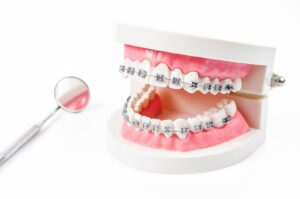
The steps are fairly consistent regardless of the reason for switching:
- Request your full orthodontic records from your current provider. This includes diagnostic photographs, panoramic and cephalometric X-rays, study models or digital scans, and a copy of the original treatment plan. Most practices will provide these within a few days.
- Schedule a transfer consultation with the new orthodontist. Bring your records. The new provider will review them, examine your current progress, and give you an honest assessment of where you are and what still needs to happen.
- Discuss any remaining treatment time or financial adjustments. A new practice will typically charge a transfer fee or a reduced treatment fee reflecting the work remaining rather than the full case fee. Ask about this upfront.
- Confirm continuity of treatment. Check that the new orthodontist is comfortable continuing with your current appliance type or whether any changes will be needed.
- Get everything in writing before committing. Understand the new treatment timeline, cost structure, and what happens if treatment runs longer than estimated.
Tip: If your original orthodontist is being difficult about releasing your records, know that you are legally entitled to copies. Records are yours, and practices are required to provide them, typically within 30 days of a written request.
Does Switching Reset Your Progress?
No. The tooth movement that has already happened does not reverse because you changed providers. Your teeth are where they are. The brackets bonded to them contain information about your treatment in the form of their prescription and positioning. A competent new orthodontist can read that setup and continue from it.
What Might Need to Change
In some cases, a new orthodontist may want to rebond certain brackets that are not positioned optimally for finishing, or switch archwires to ones that align with their preferred technique. These are minor adjustments, not a fresh start. They are also worth tolerating if they mean your finishing phase is done correctly.
What Stays the Same

The braces themselves, the alignment already achieved, and the overall direction of your treatment remain intact. You are not going back to square one. You are continuing, with someone new holding the map.
It is worth knowing that braces remain one of the most reliable orthodontic tools available, regardless of who is directing them. According to comparative research on orthodontic outcomes, traditional braces correct malocclusions in about 90% of cases, performing slightly ahead of clear aligners at 88%. That success rate holds regardless of which provider completes the treatment, as long as the work is done carefully and the records are followed.
What to Look for in a New Orthodontist
Not all mid-treatment transfers go smoothly, and part of that comes down to choosing the right incoming provider. Here is a quick comparison of what to look for:
| Green Flags | Red Flags |
| Reviews your records thoroughly before offering a plan | Immediately suggests starting over |
| Explains what was done well and what needs adjustment | Cannot or will not interpret existing records |
| Transparent about transfer fees upfront | Vague about cost until after you commit |
| Asks about your goals and original treatment intent | Treats you as a new case without context |
| Gives a realistic revised timeline | Promises the same or shorter timeline without reviewing records |
If you are transferring care for a child, the considerations are slightly different. Children’s jaw development is ongoing, and early orthodontic treatment involves interceptive phases that depend on timing. A new orthodontist taking over a child’s case should review the original Phase 1 findings alongside the current status before making any decisions.
Transferring to Bowers Orthodontic Specialists in Bloomington
If you are relocating to the Bloomington-Normal area or looking to transfer your care to a new provider, Bowers Orthodontic Specialists welcomes transfer patients. As your trusted Barnes orthodontist serving the greater Bloomington-Normal region, Dr. Bowers has been practicing in Bloomington since 1993 and is experienced in picking up mid-treatment cases from across the country. Our team will review your records carefully, walk you through exactly where you stand, and build a realistic plan for finishing your treatment well.
Our office is at 2810 E. Empire St., Suite A, Bloomington, IL 61704. Call us at 309-663-0415 to schedule a transfer consultation.
Schedule Your Transfer Consultation at Bowers Orthodontic Specialists
Frequently Asked Questions
Will I have to pay for treatment all over again if I switch?
Most practices charge a transfer or continuation fee that reflects the work remaining rather than the full case cost. The exact amount varies by practice and how far along you are. Ask upfront for a clear breakdown before committing. In most cases, the cost is significantly less than starting a new case from scratch.
Can I switch orthodontists if I am in the middle of wearing Invisalign?
Yes. Invisalign transfers are often straightforward because the digital treatment plan can be accessed and reviewed directly through the Invisalign system. A new certified provider can continue from your current aligner stage or order refinements if needed. Bring your current aligner packaging and any retainers you have received.
How long will it take to get my records from my current orthodontist?
Most practices can have records ready within one to five business days. Some may take up to two weeks. If you need them urgently, explain the reason and ask whether a digital copy can be sent more quickly. Physical models or retainers may take longer to transfer.
What if my new orthodontist wants to remove and replace my brackets?
This sometimes happens if brackets were not positioned optimally by the original provider or if the new orthodontist uses a different bracket system that requires specific positioning. It feels like a setback, but it usually is not. Correctly placed brackets produce better finishing results, and any short-term inconvenience is typically worth it.
Is it normal to feel anxious about switching?
Completely. Orthodontic treatment is a long relationship with a provider you have come to trust, and starting that relationship over mid-process can feel unsettling. The best thing you can do is ask a lot of questions at your transfer consultation and make sure you feel genuinely heard before committing. A good orthodontist will understand and welcome the questions.