
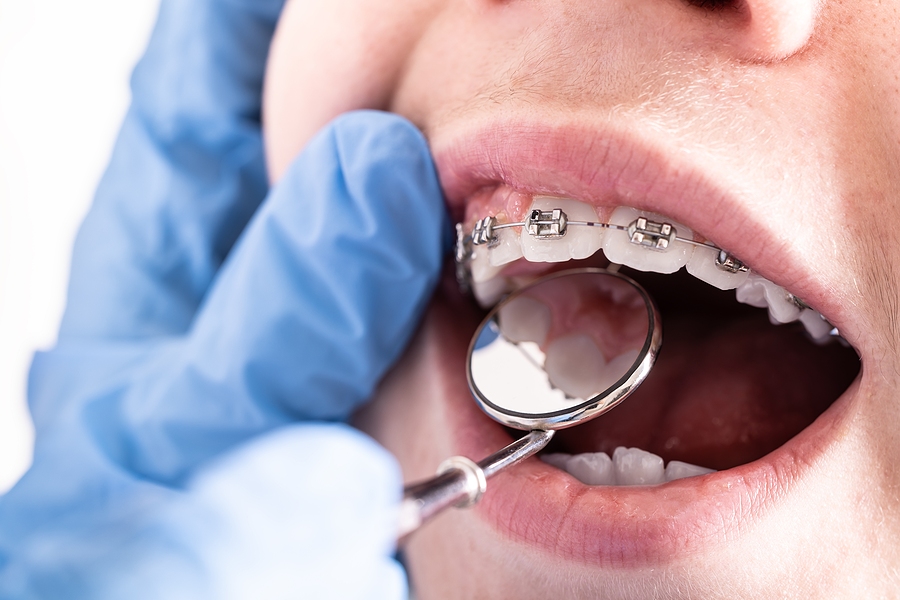

A jaw surgery orthodontic timeline is a coordinated treatment plan, rather than a calendar that applies to everyone. Some of the work happens before the operation, and orthodontic finishing continues afterward. The useful question is not simply “Which month is surgery?” It is “What needs to be ready before we move to the next phase?”
For Bloomington-area patients considering combined treatment, the orthodontist and oral and maxillofacial surgeon have different responsibilities. Your orthodontist manages tooth movement and the bite plan. The surgeon evaluates and performs any recommended jaw operation. An assessment does not mean that surgery will necessarily be recommended.
Why braces may come before jaw surgery
Braces can move teeth within the jaws. Surgery may be considered when the relationship between the jaws requires a correction that tooth movement alone cannot provide. The distinction depends on your examination, growth, records and goals; a photograph or an online symptom checklist cannot establish it.
Before an operation, orthodontic treatment may position the teeth so the upper and lower arches can fit together in the planned jaw positions. This can involve undoing tooth positions that have compensated for the jaw relationship. Ask whether your bite or appearance might change during preparation, and what the team expects that phase to accomplish.
The American Association of Orthodontists explains surgical orthodontics as a team approach. For the practice’s overview, read Bowers Orthodontics’ jaw surgery information.
A phase-by-phase timeline to discuss with your team
The table below deliberately uses readiness milestones. Assigning a fixed month to surgery or recovery without your clinical plan could give you the wrong expectations.
| Phase | Main purpose | What to clarify before moving on |
|---|---|---|
| Assessment and planning | Understand the bite, jaw relationship and available options | Who is on the team, what records are needed, and what alternatives are reasonable? |
| Pre-surgical orthodontics | Position teeth for the planned jaw correction | Which tooth movements determine readiness for surgical planning? |
| Surgical preparation | Confirm the operation plan and practical arrangements | Which instructions, appointments, transport and support do you need? |
| Operation and early recovery | Complete the procedure and follow the surgeon’s recovery plan | Who handles urgent concerns, and what restrictions apply to you? |
| Orthodontic finishing | Refine tooth positions and how the bite fits | When can adjustments resume, and how will progress be assessed? |
| Retention | Help maintain the corrected tooth positions | What retainer schedule and follow-up are prescribed? |
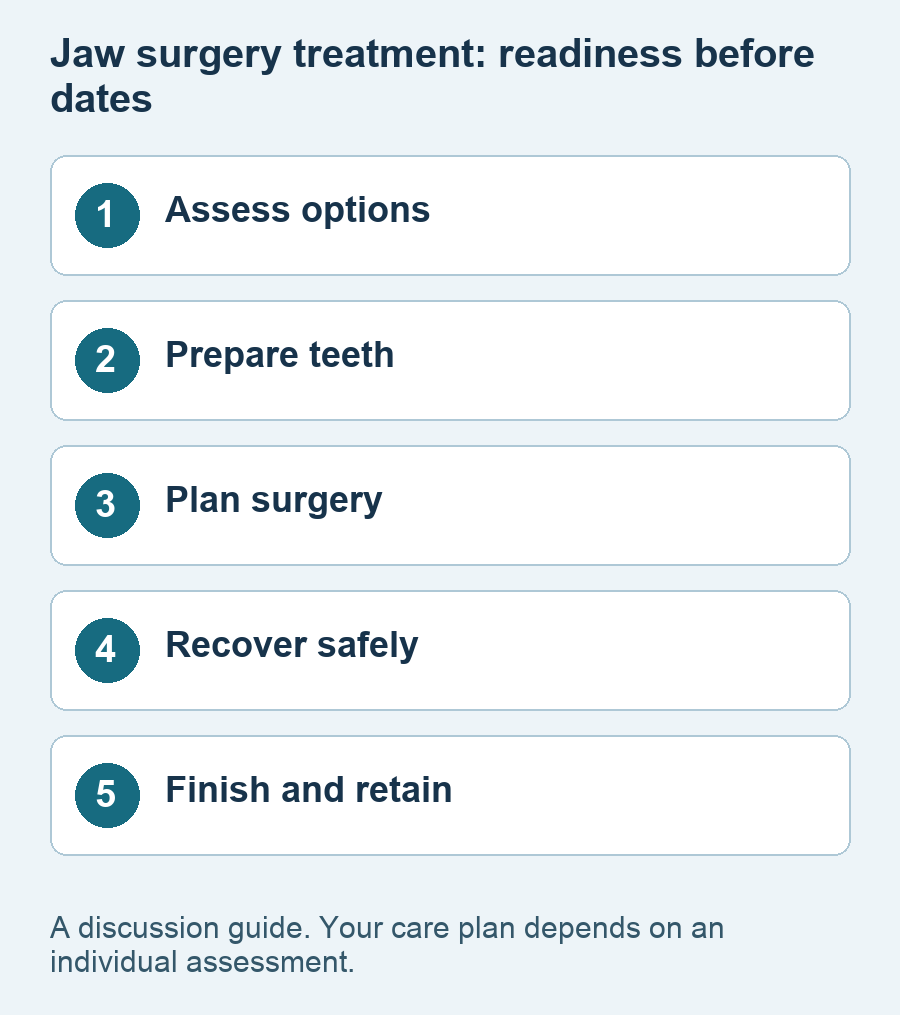
These phases can overlap. The team may revise the sequence as records or clinical findings change. That is why a personal written plan is more useful than comparing your progress with someone else’s social-media timeline.
Turn the plan into a practical household calendar
Once the team identifies the likely sequence, work backward from the arrangements you need. Tell the clinicians about school terms, work demands, caregiving, travel and the help available at home. A deadline can inform planning, but it should not become a reason to skip a readiness check.
Use this appointment checklist:
- Identify each clinician’s role. Know who answers orthodontic questions and who manages surgical recovery.
- Ask what determines the next phase. Request the clinical milestone, rather than only an estimated date.
- Discuss time away from normal activities. Your surgeon should advise when work, school, driving, exercise and other activities may resume.
- Write down the recovery instructions. Follow your individual directions about medicines, eating, oral care and follow-up.
- Confirm how to reach the team. Keep daytime and after-hours contact instructions accessible.
- Plan for finishing and retainers. The operation is one part of the treatment, not automatically the last appointment.
Recovery questions that need individual answers
People often want a single answer about swelling, soft foods or returning to work. Those details depend on the procedure, your health, the way recovery progresses and the surgeon’s instructions. Do not use another patient’s diet schedule or medication plan as your own.
Before surgery, ask which symptoms are expected and which require a call. Ask specifically about eating and drinking, cleaning around appliances, sleep arrangements, activity restrictions and any equipment you will use. If the written and verbal instructions seem inconsistent, clarify them before the procedure.
For breathing difficulty, uncontrolled bleeding or another potentially life-threatening problem, seek emergency help. For other concerns, use the surgical team’s instructions rather than waiting for a routine orthodontic visit.
Why the timeline may change
Tooth movement does not run to a perfectly fixed clock. Growth assessment, oral health, missed visits, appliance damage and the coordination of clinical appointments may affect the plan. New information may also lead the team to reconsider an approach.
Ask what you can control: attending appointments, keeping teeth and gums clean, protecting appliances and following the prescribed instructions. Avoid interpreting a revised date as proof that something has gone wrong; ask what changed and how the next milestone will be judged.
What happens after the braces come off?
Retention remains important after combined treatment. Teeth can move over time, so the orthodontist will explain the retainers and wear schedule appropriate for you. Keep follow-up appointments and report a lost, broken or poorly fitting retainer promptly. The AAO’s retainer guidance describes retention as an ongoing part of maintaining orthodontic results.
If you are considering treatment, use Bowers Orthodontics’ first-visit information to prepare your questions. Bring concerns about function, appearance and daily life so the consultation addresses what matters to you.
Frequently asked questions
Does everyone with an overbite need jaw surgery?
No. The team must distinguish tooth-position concerns from the relationship between the jaws. The appropriate options depend on an individual assessment.
Can surgery happen before braces?
Some treatment plans use a different sequence, but suitability requires specialist planning. Ask why your team recommends its particular order.
Will my bite feel different before the operation?
Preparatory tooth movement can change how the teeth fit. Ask what changes are expected in your plan and how the team will monitor them.
When can I return to work or normal meals?
Your surgeon should give personalized recovery and clearance instructions. A general article cannot provide a safe return date or diet schedule for your operation.
Are retainers still necessary after jaw surgery?
Usually, retention is part of maintaining tooth positions after orthodontic treatment. Follow the schedule prescribed by your orthodontist.